Table of contents:
What VR Trends Were Dominant in Recent Years?
VR Popularity and Adoption in 2026
What Are the Key Virtual Reality Trends of 2026?
Which Industries Are Using Virtual Reality in 2026?


In 2026, Virtual Reality has become more mainstream than ever before, with a significant increase in adoption rates across various industries. The global pandemic of 2020-2021 accelerated the demand for VR technology as people sought alternative ways to work, learn, and socialize remotely. Numerous news stories have highlighted the ways that renowned brands and corporations are venturing into the industry. Given how eventful the past year has been, 2026 is poised to be even more so.
As an expert with more than 10 years in AR/VR development, in this article I’ll delve into the major Virtual Reality trends anticipated for the upcoming year, offer insights into potential developments, and underscore why the current moment presents an opportune time for businesses to seek out a VR development company for a potential partnership.
What VR Trends Were Dominant in Recent Years?
VR Popularity and Adoption in 2026
What Are the Key Virtual Reality Trends of 2026?
Which Industries Are Using Virtual Reality in 2026?
In the past few years, I’ve observed several emerging VR trends that have gained popularity, paving the way for the future of Virtual Reality. Some of these include:
These dominant trends have shaped the VR landscape, setting the stage for the exciting developments and innovations we can expect down the road.

Wondering how VR works in real-world projects?
Explore our VR case studies and discover how we’ve delivered immersive solutions across healthcare, education, manufacturing, and entertainment.
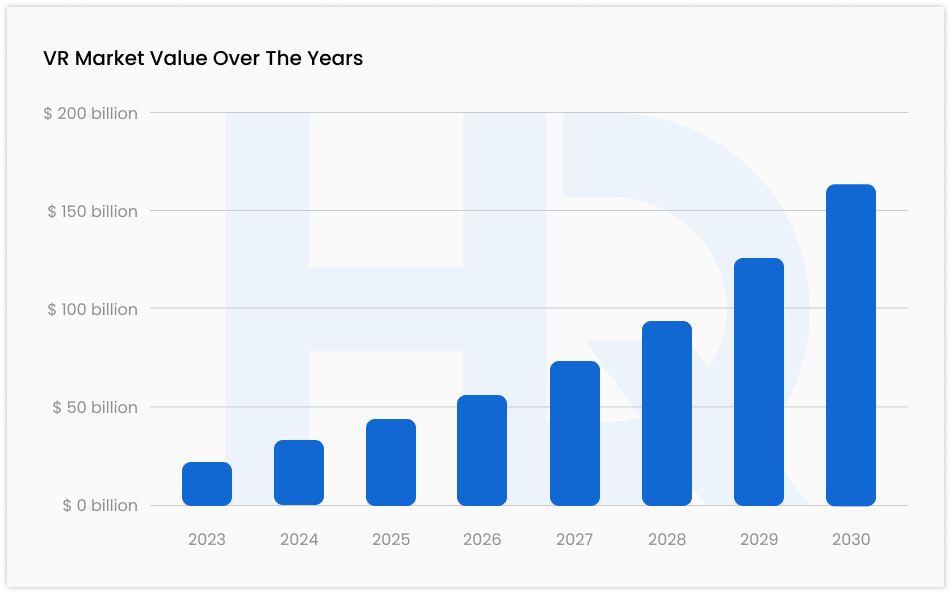
The global VR market was valued at around $67.66 billion in 2025 and is projected to grow significantly through the decade. This growth can be attributed to several factors, including the increasing affordability of VR hardware, the development of more user-friendly and intuitive interfaces, and the growing library of engaging VR content. In the picture below you can find some Virtual Reality future predictions up to 2030.
The gaming industry remains one of the primary drivers of VR adoption, with an estimated 70% of VR users engaging with gaming content regularly. However, VR has also made significant inroads in other sectors, such as education, healthcare, and professional training.
In 2026 in particular, it’s estimated that about half of universities and colleges worldwide will offer VR-based courses, while 69% of healthcare decision-makers are planning to invest in VR for patient treatment and staff training. The enterprise sector has also embraced VR technology, with businesses leveraging it for remote collaboration, product design, and customer engagement. A recent survey revealed that over 75% of Fortune 500 companies have implemented VR in their operations, citing improved productivity, reduced costs, and enhanced innovation as key benefits.
So, with ongoing advancements in hardware, software, and content creation, the popularity and adoption of VR are poised for even greater growth in the years to come.
How do modern businesses use AR to increase their revenues and outperform their industry competitors?

As Virtual Reality becomes more accessible and integrated with other emerging technologies such as AI, AR, and blockchain, the possibilities for immersive experiences are boundless. Whether it’s through more realistic avatars, enterprise applications, or haptic feedback, VR is impacting how we interact with digital worlds. After a thorough analysis of over 50 VR projects, I’ve identified the key Virtual Reality trends that have emerged in 2026.
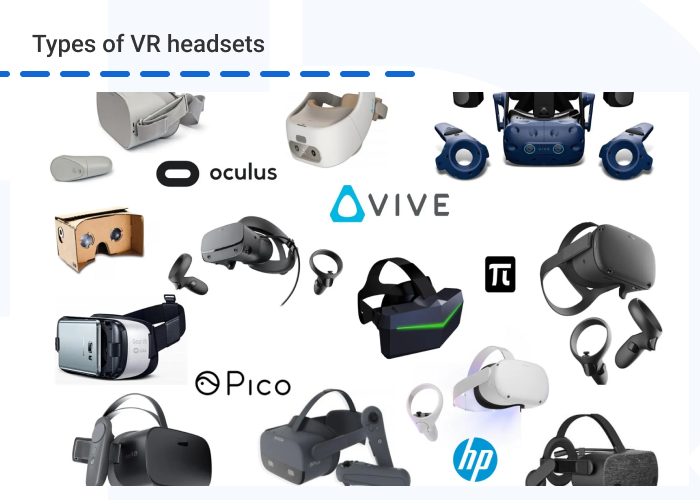
With competitive pricing and subscription models, the future of VR headsets and content is such that they’re now within reach of a broader audience. One of the most significant shifts in VR hardware is the rise of standalone headsets. Devices such as Meta Quest 3 and Pico 5 have eliminated the need for external PCs or consoles, offering all-in-one solutions that deliver high-performance VR experiences.
These wireless, portable devices are making VR more accessible and convenient for both casual users and enterprise applications, without compromising on quality. This trend is crucial for mainstream adoption and will drive further innovation and investment.
2026 is seeing a continued focus on haptic feedback and other sensory technologies that enhance immersion in VR experiences. Haptic gloves, suits, and even full-body rigs are becoming more affordable, allowing users to feel touch, pressure, and movement within virtual environments. This new Virtual Reality technology is particularly valuable in industries like gaming, healthcare, and training, where the sense of touch can add a critical layer of realism and engagement.
Driven by VR advancements in graphics processing, virtual environments are becoming more detailed and lifelike. These visual leaps are allowing for more immersive experiences, where users can explore virtual worlds with photorealistic textures, lighting, and high frame rates. Combining all this with full-body tracking, users can now fully embody their avatars, enhancing the overall immersion.
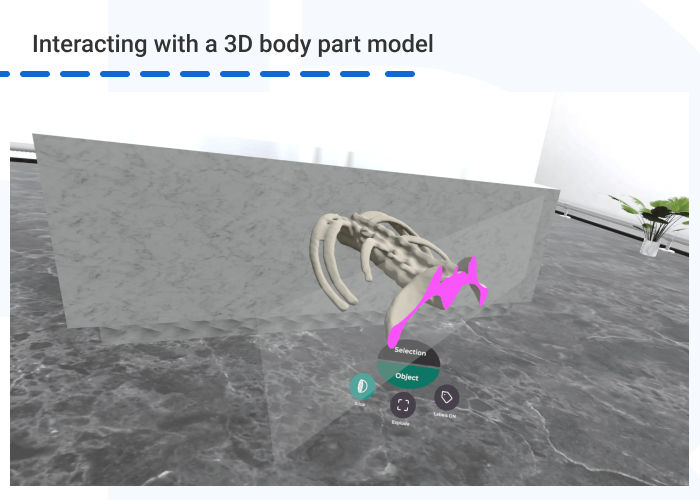
For instance, at HQSoftware we’ve developed BodyScope, a VR tool designed to improve medical learning by using highly realistic visualization. The VR app allows users to create 3D models from their CT, MRI, or PET/CT scans and manipulate them. In particular, you can view and rotate 3D models, scale them, apply image filters, create custom slices, and use measurement tools for detailed analysis, all enhanced with adjustable lighting.
In entertainment, VR is used to create immersive experiences in gaming, movies, museum tours, and live events. For example, in the film industry VR creates virtual movie experiences, such as virtual tours of sets and behind-the-scenes footage. In the media industry, in VR you can provide virtual news broadcasts and educational programs.
One example is a VR museum journey that we’ve engineered by HQSoftware, transporting museum visitors into an immersive environment that accurately recreates the historical period and setting of the gallery exhibits. Through this innovative solution, you can fully engage visitors in the culture and daily life of the featured cultural group.
Immersive workouts are transforming how we approach fitness, blurring the lines between gaming and exercise. Platforms such as Supernatural, FitXR, and Holofit are altering workouts into immersive, gamified experiences. Users can now box in virtual arenas, cycle through futuristic landscapes, or meditate in serene, otherworldly environments.
These VR fitness applications offer personalized coaching and progress tracking, enhancing motivation and consistency. As more people look for engaging ways to stay active, VR fitness is becoming a popular alternative to traditional exercise routines.
Healthcare professionals use VR exposure therapy to treat various phobias, pain management, post-traumatic stress disorder (PTSD), depression, and anxiety disorders, allowing patients to confront their fears in a controlled environment, potentially decreasing the need for pain medication. For cognitive rehabilitation, VR applications help patients recovering from strokes or brain injuries to relearn daily tasks in a safe setting.
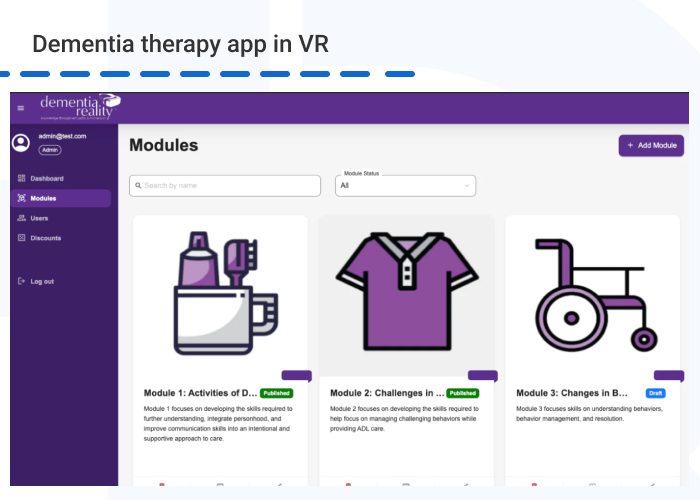
VR training for providing effective dementia care has been created by the HQSoftware team. The VR training teaches professionals and families how to provide compassionate dementia care, demonstrating best practices and preventing common mistakes that cause emotional distress. This immersive VR dementia care simulation covers daily living challenges, behavior management, dining, and effective communication strategies, highlighting potential pitfalls.
The use of Artificial Intelligence in VR content creation is expanding dramatically in 2026. In 2023, the global AI in VR and AR market was valued at $39.2 billion. However, with over 10.8 million Virtual Reality devices sold, this figure could reach significant growth.
AI is being used to generate procedural environments, create intelligent non-player characters, and even design entire worlds autonomously. This trend is allowing for more dynamic and personalized VR experiences, where virtual worlds can evolve based on user behavior. In gaming, tourism, and virtual retail, AI is enabling experiences that feel more organic and responsive, pushing the limits of what’s possible in VR storytelling and design.

Struggling to turn VR trends into real business value?
We create custom VR solutions for your industry, from immersive training and education to enterprise collaboration and customer experiences.
Victoria Rokash
Business Development Manager
The use of Virtual Reality in education is a major trend in 2026, with schools and universities adopting the latest VR technology to create immersive learning environments. Whether it’s a virtual simulation of a historical event or a virtual exploration of anatomical structures, VR is enhancing the way students learn. Medical schools, for example, are using VR for diagnosis training, allowing students to practice procedures with a virtual patient or separate organs.
VR medical training developed by HQSoftware offers various virtual environments, including lobbies and classrooms, for collaborative learning. Students can interact in dedicated virtual rooms, sharing 3D models, videos, and presentations, and collaboratively exploring anatomy, medical procedures, and theoretical concepts through interactive VR simulations and live lectures. Using the app, students increased their knowledge retention by up to 63%, and user engagement improved by up to 72%.
VR is increasingly being adopted by businesses for more than just entertainment. The new Virtual Reality technology helps improve employee training outcomes, offers remote collaboration possibilities, and assists users in acquiring new specialized skills. VR creates immersive training simulations and virtual walkthroughs, enabling global real-time collaboration for complex industrial sectors such as manufacturing, automotive, and aviation.
One brilliant example is a VR training program to master hard skills in engineering, mechanics, and aviation. This occupational training software helps employees acquire new job skills, such as performing propeller inspections, engine repairs, brake replacements, etc., allowing for repeated practice without real-world risks. The results show an 84% engagement rate and 67% knowledge retention during VR training, proving its effectiveness and enabling global reach.
2026 has seen a convergence of AR and VR technologies, creating Mixed Reality experiences. While VR creates fully immersive virtual worlds, AR overlays digital information onto the real world. AR integration, via smart glasses, heads-up displays, and mobile apps, expands VR’s potential, fueled by VR advancements in spatial computing. This allows for real-time interaction with the physical environment, creating transformative applications across various sectors and blurring the lines between reality and virtuality.
Overall, these trends shaping VR in 2026 highlight not just the technology’s potential, but its growing influence across industries.

Andrey Kazakevich
Head of Production
at HQSoftware“As a head of production with more than 10 years of expertise, I can say that the future of VR isn’t just about better graphics. It’s about deeper immersion and seamless integration with our daily lives. We’re on the cusp of a century where VR transcends entertainment, becoming an indispensable tool for education, training, collaboration, and even healthcare. The possibilities are limitless, and at HQSoftware we’re excited to be at the forefront of this promising technology.”
Based on HQSoftware’s extensive AR/VR development experience, we can highlight the key sectors currently utilizing VR. This include:
Virtual Reality impacts healthcare through applications in:
VR improves education with immersive, interactive learning that boosts student engagement and knowledge retention. Key areas include:

Unsure how to implement VR without technical risks or budget overruns?
Our team provides end-to-end VR consulting and development, helping you plan, prototype, and deploy scalable VR applications.
Dmitry Tihonovich
Business Development Manager
The gaming industry spearheads VR innovation, constantly pushing boundaries with increasingly realistic graphics, advanced haptic feedback systems, and more intuitive controls.
VR can enhance the way we design, build, and sell properties. For instance, this can encompass:
VR can help cut returns and boost sales by letting customers experience products virtually before buying. Here are some ways it’s being used:
Travel companies are using VR to create immersive experiences, allowing customers to explore destinations before booking. They can provide, for example:
Manufacturers leverage VR to enhance production and logistics by implementing:
To conclude, as Virtual Reality continues to advance in 2026, its integration across industries shows no signs of slowing down. With innovations in immersive experiences, training, and collaboration, VR is poised to become an essential tool for both businesses and consumers, driving the future of digital interaction.
At HQSoftware, we provide full-cycle VR development services. Our expert team can guide you through every stage of the VR development journey, from ideation and conceptualization to design, development, testing, and deployment. Whether you need a custom VR application for training, marketing, education, or entertainment, we have the expertise to deliver a high-quality, immersive solution tailored to your specific needs.
Our services encompass:
Contact us to gain access to a dedicated team of VR specialists committed to delivering cutting-edge solutions that drive tangible results for your business.

HQSoftware Founder
Having founded the company in 2001, uses his broad knowledge to drive the company forward. Ready to share his wisdom on software development and technology insights


Subscribe for more!
We are open to seeing your business needs and determining the best solution. Complete this form, and receive a free personalized proposal from your dedicated manager. Sergei Vardomatski Founder
Kick Off With Your Project Today