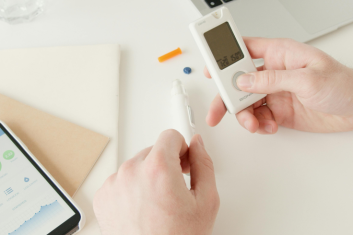
Here is the part that confuses a lot of operations leaders. You do not need to buy a single new sensor to act on that. The sensors are probably already on your floor. What is usually missing is the IoT data layer: the software that pulls that data together, makes sense of it, and turns it into something a person can act on.
This article explains what a software-only IoT layer actually does and where it fits.
At HQSoftware, we work on exactly this layer: IoT software integration on top of equipment your plant already owns.
What’s the Difference Between an IoT Hardware Vendor and an IoT Data Partner?
An IoT hardware vendor builds and sells physical sensors, gateways, and devices. An IoT data partner builds the software layer on top of them. HQSoftware is the second kind. We do not design devices. We do not build hardware. We do not write firmware. We work with the devices you already have.
Many plants already have them:Deloitte found that 46% of manufacturers already run IIoT solutions at the facility level. That is a lot of sensors already collecting data somewhere. Our job starts after the sensor does its work: collecting that data, processing it, running analytics on it, and turning it into understandable information on a dashboard that someone actually looks at.
This distinction trips people up because “IoT company” sounds like one thing. In practice, it splits into two very different jobs. A hardware vendor builds and sells the physical sensors, gateways, and devices. A software-only IoT partner builds the layer that makes sense of what those devices are already saying. If your plant has sensors gathering dusty statistics in a database nobody queries, you need the second kind of help.
Want to see what a data layer looks like in a real project?
Sensor readings become dashboards and alerts in practice, not just on a diagram. Our IoT case studies show how that works across different equipment and industries.
A software-only IoT data layer does three things: it collects data from your existing sensors, it stores and processes that data, and it turns it into dashboards and alerts people actually use.
Data Collection From Existing Sensors and PLCs
This step pulls data out of whatever is already running on your floor. That usually means existing IoT sensors, programmable logic controllers (PLCs), and SCADA systems that have been quietly logging temperature, vibration, pressure, or machine state for years.
The work here is connecting to protocols these systems already speak, rather than replacing them. A PLC that has run a conveyor line since 2015 does not need to be ripped out. It needs a listener that reads its output and routes it somewhere useful. This is where OT/IT integration becomes the real challenge: operational technology and information technology were built by different teams, for different purposes, and rarely speak the same language on day one.
Storage, Processing, and ETL for IoT Data
Raw sensor data arrives messy, fast, and in a format nobody wants to look at directly. This stage extracts, transforms, and loads it (ETL) into something structured: timestamped, labeled, and queryable.
Where that data lives matters. Some teams route it into a data lakehouse, which keeps both raw and processed data in one place without forcing an early decision about structure. The choice between storing everything or only what you need comes down to cost versus flexibility, and it is worth deciding deliberately rather than by default.
Analytics, Dashboards, and Visualization
This is where IoT dashboards turn a wall of numbers into a decision. Predictive analytics models learn what normal equipment behavior looks like, so they can flag what isn’t normal before it becomes a breakdown.
The goal is not a dashboard for its own sake. It’s meant to answer one specific question clearly: which machine needs attention, and why. A dashboard nobody checks is just another unused sensor, dressed up with a chart.
Software-Only IoT Integration or Hardware Replacement: Which Do You Need?
Choose software-only IoT integration when your equipment is already recording data that nobody uses. Choose hardware replacement when a machine produces no digital signal, or when a key measurement is missing.
Software-only IoT integration
Hardware replacement
What changes
A software layer is added on top of devices you own
Sensors, controllers, or gateways are swapped or added
Existing equipment
Stays in place
Replaced or upgraded
Main work
Data connections, IoT data pipeline, analytics, dashboards
Procurement, installation, wiring, commissioning
Impact on production
Little to none, since devices keep running
May require planned stoppages for installation
Starting point
Data you can already access
New devices installed and running
Main cost driver
Software development and integration
Devices and installation, plus the software still needed on top
Best fit
Existing IoT sensors record data that nobody uses
A machine has no digital signal, or a key measurement is missing
Limit
Cannot create data that a machine does not produce
Does not turn readings into decisions on its own
The last row of each column matters most. New devices still need an IoT data layer to be useful. A software layer needs data to work with. Some projects need both, in that order: fix the gap in the equipment, then build the layer.
If you are not sure which column you are in, list what each machine records today. That list answers the question faster than any vendor pitch. It also shows where OT/IT integration will be the main challenge.
Where Does a Software-Only IoT Layer Fit? Industrial, Agriculture, and Smart City Use Cases
A software-only IoT layer fits anywhere sensors already generate more data than anyone is using. That spans far beyond a single factory floor, and the technical challenge changes meaningfully from one setting to the next.
Industrial settings are the most familiar case and also the most forgiving technically. Machines on a production line report vibration, temperature, and output on a predictable cycle, through protocols that have been standardized for decades. Industrial IoT data here is rarely the hard part. It’s convincing a plant that has run the same PLC since 2015 that nothing needs to be replaced, only connected. Once that connection exists, predictive maintenance and real-time equipment visibility provide the payoff.
Agriculture is a different engineering problem. An IoT data pipeline for agriculture has to handle volume first. Ouragriculture app analyzes soil composition across more than 35 configurable parameters and shows the results on a map in real time. It aggregates data from two million data points a day with zero downtime. The software layer has to turn a large number of readings into a single map view that someone can act on.
Smart city deployments add a third constraint on top of both: scale and ownership. Traffic sensors, utility meters, and public infrastructure devices are often installed and maintained by different municipal departments, or different vendors entirely, each with its own data format. The software layer’s real job in this context is less about analytics and more about reconciliation: making dozens of inconsistent sources agree on what “now” means before any dashboard can be trusted.
There’s one common thread among all three of these examples: whereverexisting IoT sensors already sit unused, more hardware is rarely the next step. What’s different between these sectors is exactly which software problem keeps the data from becoming a decision someone can act on.
Real-World Example: From Sensor Data to Predictive Action
A manufacturing company was servicing its industrial equipment on a fixed schedule, regardless of how each machine was actually performing. Some machines got maintenance they didn’t need. Others broke down between scheduled checks, and unplanned downtime cost far more than routine servicing ever would.
The starting point was data the company already had. Years of sensor telemetry, temperature, vibration, pressure, rotation speed, and failure logs had already been recorded electronically. The HQSoftware teambuilt a real-time monitoring system on top of that recorded data, one that learns what normal behavior looks like for each specific machine and flags it the moment something drifts.
The mechanics follow the same IoT data layer pattern described earlier in this article. Sensor data streams in continuously through AWS Kinesis and gets scored in near–real time, in under two seconds. A separate model is trained for each equipment type, since a lathe and a conveyor belt simply do not behave the same way, and treating them as one would have buried real signals in noise. Each alert names the specific machine, the sensors driving the anomaly, and the timestamp, so an engineer can act without digging through raw data first.
The sensors and years of recorded data already existed. What was missing was the software layer that could turn those readings into a signal an engineer could act on before a machine actually failed.
Unplanned downtime dropped by 45%. The system now catches 85% of real failures before they happen, with a false-positive rate under 8%, and engineers now get 24 to 48 hours of warning instead of discovering the issue only when a machine actually stops.
Wondering whether your equipment can feed a data layer?
Legacy PLCs, older SCADA systems, and mixed protocols are common starting points. Describe what you run, and we will tell you what is realistic before you commit to anything.
Edge Computing or Cloud for IoT Data: What Should You Decide First?
Decide first how fast a decision has to happen. If a machine must react in milliseconds, process the data at the edge, close to the machine. If seconds or minutes are fine, the cloud is usually simpler to run and easier to maintain.
Edge computing means the analysis happens on or near the equipment, before data travels anywhere. The cloud means the data streams to a central platform first. Three questions help you choose.
How fast must the response be? An emergency stop cannot wait for a round trip to a data center. A maintenance warning that arrives a day ahead can.
How reliable is the connection? A remote site with patchy coverage needs some processing on location. A plant with stable networking has more freedom.
How much data is worth sending? Streaming every raw reading costs money. Filtering at the edge and sending only what matters can cut that cost.
Our predictive maintenance project shows the results of the other side of the choice. Readings arrived every 10 seconds, and the system scored them in under two seconds through a cloud streaming service. For a 24- to 48-hour warning, that speed was more than enough.
Many teams end up with a mix: quick local decisions at the edge, long-term analysis in the cloud. Good IIoT software lets you move that line later without rebuilding the pipeline. If a digital twin is on your roadmap, keep the raw history somewhere you can reuse it.
Build or Buy: How Do You Choose a Software-Only IoT Layer?
Buy when your needs look like those of most other plants. Build when your equipment, data, or decisions are specific enough that a standard product would need heavy workarounds. Many teams end up with a mix of both.
Off-the-shelf IoT analytics platforms fit standard cases well. Common sensors, common protocols, and familiar dashboards for uptime or energy use are all good candidates. You start fast, and someone else maintains the product.
A custom build earns its cost in three situations:
Your equipment is older or uses unusual protocols.
Your analytics depend on how your own machines behave. In our predictive maintenance project, each equipment type needed its own model.
The layer has to feed your ERP integration and other internal systems in a specific way.
Both routes carry hidden costs. A purchased platform can push you to bend your process around its features. A custom system gives you control, but you own the upkeep. Skip documentation and testing, and the technical debt arrives within a year or two.
Before you decide, answer four questions:
How standard are your sensors and protocols?
Which decision should the data support, and is that decision generic?
Who will maintain the system in two years?
How will it connect to the rest of your systems?
If you are not sure where your workflow loses time, run process mining on it first. This shows you where decisions stall, and that tells you which data a software-only IoT layer must deliver.
A middle path often works best. Start with a ready-made platform for the first IoT dashboards, then build custom components only where real gaps appear. Choose open standards either way, so your IoT data pipeline is not locked to one product.
What Does HQSoftware Deliver in a Software-Only IoT Project?
HQSoftware builds the software between your equipment and the people who make decisions: data connections, pipelines, analytics, dashboards, and links to your business systems. A typical scope has five parts.
Data connections. We read data from your devices and gateways through standard IoT protocols such as MQTT, CoAP, and HTTP.
Pipeline and storage. We design a scalable architecture for high data volumes. It runs in the cloud or on your own servers. This is the base of any IoT data pipeline.
Analytics. We apply machine learning and predictive analytics to the stored data. Where a decision must happen close to the machine, we use edge computing.
Dashboards and apps. We build web and mobile IoT dashboards, with UI/UX design and testing included.
Links to business systems. We connect the layer to CRM, ERP, and other tools. This ERP integration keeps alerts and reports in the systems your team already uses.
A project starts with a consultation. We agree on scope, budget, and schedule, and plan how the solution connects to your devices and other software. Then we build a prototype, so you can judge the features before you commit to the full build. You can work with a dedicated team, or add our developers and QA engineers to your own.
Come with a short list of what you already record. In our predictive maintenance project, the inputs were sensor telemetry, failure logs, maintenance records, equipment specs, and production logs. Your list will differ, and this is enough to start the conversation.
Cost and timeline depend on features, platforms, technologies, and deadline. That is why we prepare an individual proposal after the first conversation, free of charge.
Conclusion
Hardware is the part of an IoT project that gets the attention. The software layer decides whether anyone uses what the hardware collects.
HQSoftware does not sell devices, so we have no reason to push you toward new ones. We start with what your plant already has and look at what it is worth. Sometimes the answer is a focused IoT software integration on existing equipment. Sometimes it is a clear list of what is missing, before you spend a dollar on it.
If your sensors are installed but their data is not doing any work, talk to our team. Tell us what equipment you run and what decision you want the data to support. We will tell you plainly what a software-only approach can do for you, and what it cannot.
An experienced software developer specializing in IoT and AI-driven technologies. Having contributed to more than 20 IoT projects, shares practical expertise and insights on connected software development, AI integration, and intelligent solutions.
Do I Need to Buy New IoT Hardware to Get IoT Data Insights?
Usually not. If your equipment already produces readings, a software layer can collect and analyze them. This is IoT analytics without hardware: you work with the sensors you own. New devices only make sense when a machine produces no data at all, or when a key measurement is missing. Check what you already record before you buy anything.
What Is the Difference Between IoT Hardware and an IoT Data Layer?
IoT hardware is the physical part: sensors, controllers, and gateways that measure and transmit. An IoT data layer is the software that collects those readings, processes them, and turns them into alerts and reports. One captures the signal. The other makes it useful. Many plants have plenty of the first and too little of the second.
Can You Build an IoT Dashboard on Top of Our Existing Sensors?
Yes, if the sensors already record data you can reach. IoT dashboards read from that data, not from the devices directly, so no new equipment is needed. The useful part is deciding what each dashboard should answer, for example which machine needs attention first. A dashboard built around one clear question gets used. One built around every available signal usually does not.
Does a Software-Only IoT Layer Work With Legacy PLCs and SCADA Systems?
In most cases, yes. A software-only IoT layer reads data through the protocols these systems already use, so nothing has to be replaced. The main challenge is OT/IT integration, since older systems were built separately from business software. One limit is worth stating plainly. If a machine exposes no digital signal at all, software alone cannot help.
How Long Does It Take to Build an IoT Data Pipeline?
There is no fixed timeline. It depends on how many sources you connect, how standard their protocols are, and how clean the data already is. An IoT data pipeline for one machine type moves faster than one covering a whole facility. Start with one use case and one equipment group, then expand once the first signal proves useful.
Is IoT Data Integration Worth It Without a Full Industry 4.0 Investment?
Often, yes. You do not need a complete Industry 4.0 program to get value from the data you already collect. The World Economic Forum’s Global Lighthouse Network, an initiative cofounded with McKinsey, now includes more than 220 best-in-class sites across more than 30 countries. That is the far end of the range, not the entry point. A focused integration on one problem, such as unplanned downtime, can pay off on its own.
We are open to seeing your business needs and determining the best solution. Complete this form, and receive a free personalized proposal from your dedicated manager.
Sergei Vardomatski
Founder
We use cookies to analyze traffic, personalize site content, and for social media features. We share this
data with our ad and social media partners. You can change your cookie settings and learn more
here. By browsing the website you consent to our rules.