Table of contents:
The Importance of Data Security in Healthcare
HIPAA Privacy and Security Rules
Key Risks and Threats to Healthcare Data
How to Protect Patient Health Information
Challenges in Protecting Patient Data


When patients come to the clinic, they often give details about themselves that they cannot or do not want to share with anyone else. They need to be assured that their doctor will not disclose this information to others without the patient’s consent. Trust between patients and the clinic is сrucial. When patients are confident that their information is kept confidential, they are more likely to seek the treatment they need or to follow their doctor’s advice.
Unfortunately, patient information breaches are becoming increasingly common nowadays. In 2023 alone, more than 700 major medical data breaches affecting millions of patients were reported worldwide. For healthcare providers, such a breach can lead to severe consequences: multimillion-dollar fines, patient lawsuits, loss of licenses, and reputational damage that may take years to repair.
As health information is stored electronically and shared between medical institutions, organizations must take proactive steps to ensure secure health data. So, how can healthcare facilities protect patient data? Let’s find the answer together!
The Importance of Data Security in Healthcare
HIPAA Privacy and Security Rules
Key Risks and Threats to Healthcare Data
How to Protect Patient Health Information
Challenges in Protecting Patient Data
In modern healthcare, patient information is more than just a computer record. It is a valuable asset that requires special protection. Healthcare data includes not only medical history, but also personal data, test results, and insurance and payment information. According to research, a single stolen medical record carries 10 times more black-market value than bank card data.
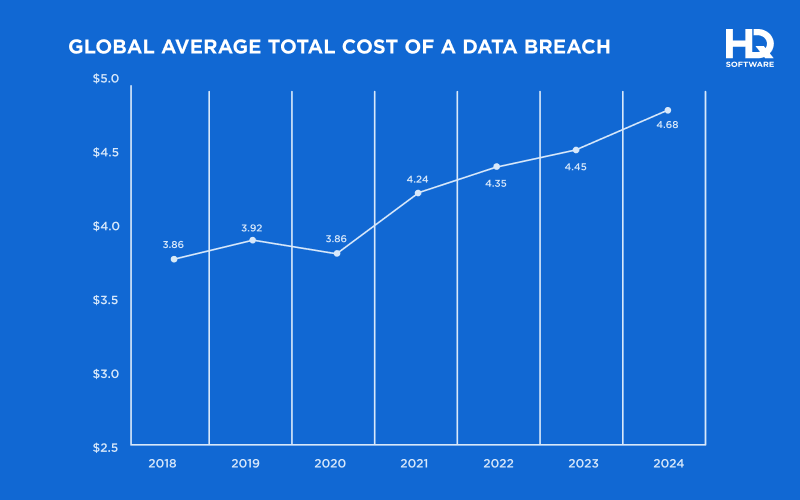
The scale of the problem is really impressive. The average cost of a data breach has risen to $4.88 million, with critical infrastructure organizations facing the highest expenses. Healthcare breaches remain the most costly, despite a 10.6% year-over-year decline—from $10.93 million in 2023 to $9.77 million in 2024.
But it’s not just about money — the health and safety of patients is at risk. Attackers can use stolen patient information for blackmail, insurance fraud, or even to create fake prescriptions for medication.
Legislation also emphasizes the importance of protecting patient data. Health care institutions face serious fines and sanctions, up to and including suspension of their activities, for violating the requirements for storing and processing medical data.
HIPAA (the Health Insurance Portability and Accountability Act) is the primary American standard for protecting medical data. But it has also become a benchmark for many other countries. HIPAA includes two main components related to secure patient information:
1) The HIPAA Security Rule defines technical and organizational measures to protect electronic patient information. It establishes specific requirements for:
2) The HIPAA Privacy Rule governs the use and sharing of health information. It defines:
Compliance with both rules is necessary to create a comprehensive patient data protection system. They complement each other: the Privacy Rule is responsible for the administrative aspects of privacy protection, while the Security Rule provides the technical side of security.
Considering custom software?HQSoftware’s team of experts can design and develop the perfect solution for your business. Let’s discuss it
Dmitry Tihonovich
Business Development Manager
There are several key threats to medical data protection that every healthcare executive should be aware of.
External cyber threats are becoming increasingly sophisticated. Hackers are using ransomware that blocks access to patient databases and demands ransom payments. The scale of the cyberattack threat is well illustrated by the WannaCry ransomware attack in 2017. This attack paralyzed more than 80 hospitals in the UK, infected over 1,200 diagnostic devices and led to the closure of several emergency departments.
As a result, more than 19,000 patient appointments were cancelled and many healthcare facilities were forced to temporarily shut down their equipment to prevent the virus from spreading. This case illustrates how a cyberattack can not only compromise data but also directly affect the ability of hospitals to provide medical care.

Another common threat is phishing attacks, which are becoming increasingly sophisticated. How do they work? Attackers scrutinize the structure of a healthcare provider and create emails that closely mimic corporate identity and management signatures. These emails may include urgent requests for access to databases, demands to update credentials through a fake portal, or downloads of supposedly important documents containing malware. New employees who are not yet familiar with internal security policies are particularly vulnerable and may mistake a phishing email for an actual management directive.
Internal threats are no less dangerous. These can range from staff negligence — for example, passing passwords to colleagues or working with sensitive data on personal devices — to the deliberate actions of unscrupulous employees who may sell patient information.
Taking into account all of the above threats, it is obvious how important it is to protect patient data and do everything possible to prevent its leakage.

HQSoftware has been developing healthcare software solutions for medical institutions for many years. During this time, we have accumulated considerable experience in protecting confidential patient data, and we are ready to share our recommendations.
An access control system is a must in a healthcare facility. It should work like a well-organized security service. Each employee should have the level of access that is necessary for their work. For example, a receptionist sees only basic patient information and appointment schedules, a physician has access to the complete medical records of his or her patients, and a laboratory assistant works only with test results.
Modern security systems use multifactor authentication. This means that simply entering a password is not enough to log in to the system. You need to confirm your identity in an additional way, for example by entering a code from an SMS. This approach significantly reduces the risk of unauthorized access, even if the password is correct.
Special attention should be paid to the process of employee termination. As soon as a person terminates their employment with the institution, their access to the systems must be blocked immediately. This rule has no exceptions and should apply to all former employees, regardless of their position.
Data encryption can be compared to a strongbox: even if an intruder gains access to it, without the correct code, they will not be able to use the contents. In the modern clinic, encryption must be used at all times: when healthcare data is stored on servers, when it is transferred between departments or between healthcare facilities, and especially when information is on portable devices.
It is especially important to ensure strong encryption of healthcare data on laptops and tablets of medical staff. There have been cases where clinics have lost devices with patient information, but strong encryption has ensured that the data remains safe.
Many organizations protect stored data with encryption, but HIPAA also requires securing data while it’s being transmitted—for example when it’s sent between systems or devices.
Outdated versions of software are like doors with faulty locks: they create vulnerabilities that can be exploited by attackers. A healthcare facility should have a clear schedule for updating all systems, from operating systems and antivirus to specialized medical software.
It is critical to promptly install security updates that close any vulnerabilities that are discovered. Failure to do so can have serious consequences. It is important to test all updates before installing them on operational systems to ensure that they do not disrupt medical equipment and software.
If your organization uses Internet of Things (IoT) devices, it’s important to keep each one updated. Outdated devices can create an easy way for criminals to access patient information. Regular updates include security fixes that help close weaknesses and protect sensitive healthcare data.
Just as a doctor checks the various health indicators of a patient, a regular audit can assess all aspects of security, from password strength to the security of your network infrastructure. It’s important to both conduct internal audits in-house and bring in outside experts who can identify problems that are invisible from the inside.
Such audits check not only the technical side of security, but also the organizational side: how employees comply with the rules, how secure workplaces are, whether access to rooms with servers and medical equipment is properly organized. Each audit results in a detailed report with recommendations on how to remedy any deficiencies found.
Need a custom software solution? We’re ready to help!HQSoftware has a team of skilled professionals ready to tackle the project. Ask me!
Victoria Rokash
Business Development Manager
Even the most sophisticated security system can be compromised by poorly trained staff. Think of data protection as a chain where every employee is an important link. If even one link is weakened, the entire system is at risk.
Training must be regular and practical. It’s not enough to simply talk about security rules. You need to teach your employees how to apply them in real-life situations. For example, how to recognize a fake email from fraudsters, why passwords should not be written down on post-it notes, and how to safely share confidential information with colleagues. It is especially important to train new employees before they have access to patient data systems.
So, the training program should include:
It is not enough to simply make copies of healthcare data; you need a sophisticated system for creating and storing it. Ideally, data should be stored in multiple locations, including remote storage. This will protect patient data even in the case of serious incidents, such as a fire or flooding in the main clinic building.
It is particularly important to regularly check that data can be restored from backups. History records many cases where organizations have discovered that their backups were corrupted or incomplete only when there was a real need to restore. Such checks should be conducted in a test environment so as not to risk working systems.
In modern medicine, information exchange takes place constantly: doctors consult with colleagues, send test results, and receive data from other medical institutions. Each such exchange should take place only through secure communication channels so that no third party can overhear or intercept the information.
Appropriate secure tools should be used for different types of communication. For example, a secure VPN connection should be used for doctors to work remotely, and specialized document management systems should be used to exchange medical documents.
A monitoring system in a medical facility should work like a vigilant guard who watches all activities in the system around the clock. It records every login attempt, tracks who accesses patient data and when, and identifies suspicious activity.
The monitoring system should track:

It is important not only to record such events but also to respond to them promptly. The security service should have an incident response plan when suspicious activity is detected. This plan assigns roles and outlines procedures for employees to follow in case of a data breach or cyberattack.
If you have the incident response plan in place, your organization will be better prepared to identify how a cyberattack occurred, what data was compromised and how to prevent similar attacks in the future. Having such a plan in place minimizes the duration of a cyber attack and the damage it will cause to your organization’s data.
A modern medical facility often works with external partners: software vendors, service organizations, insurance companies. Each such partner is a potential risk to data security. Therefore, access for third parties should be granted with extreme caution and only to the extent necessary.
Before granting access, it is necessary to carefully check the reliability of the partner, conclude a confidentiality agreement, clearly define the amount of data available and the duration of access. As soon as the work with the partner has been completed, their access to the systems must be terminated immediately.
Compliance is not just a formality but rather an important part of protecting patient data. Every healthcare facility must clearly understand and comply with the requirements that apply to it. This includes not only technical protection measures, but also proper documentation, regular reporting, and timely updates to policies and procedures.
The clinic should have a specialist or team responsible for ensuring compliance. They keep abreast of changes in legislation, conduct internal audits, prepare the necessary documentation and ensure that any identified non-compliances are addressed in a timely manner.
In modern healthcare, protecting patient data is becoming an increasingly complex task. The development of digital technologies, on the one hand, makes the work of medical institutions more efficient, but on the other hand, creates new challenges in the field of information security.
Based on our experience in developing healthcare solutions, we have highlighted the main challenges faced by medical organizations in ensuring patient data security.
According to CVS Health study, 89% of U.S. adults consider the privacy of their personal health information crucial when engaging with healthcare services. Therefore, open communication with patients about the security of their data is a must because it builds trust in the healthcare provider.
It is important that patients understand how their confidential information is protected and feel safe sharing their personal information.
When a patient visits the clinic for the first time, you need to tell them about the privacy policy in simple, easy-to-understand language. Explain what data is collected, how it is used and protected. This can be done either in person or through information materials in the registration area.

Include a section on data security on the clinic’s website. Describe the main data protection measures and talk about the certifications and security standards your organization follows. It is better to avoid complex technical terms – the information should be understandable to any patient.
When introducing new digital services, such as a mobile app or online appointment, be sure to inform patients about the inbuilt mechanisms to ensure protected patient data. This is particularly important for elderly people who may feel anxious when using new technologies.
If any data security incidents occur, it is important to inform patients promptly and honestly. Explain what steps have been taken to rectify the problem and prevent similar situations in the future.
The HQSoftware team has been developing secure healthcare solutions for over a decade, with a proven track record in implementing HIPAA-compliant systems and robust data protection frameworks. We understand the unique security challenges that healthcare providers face and deliver solutions that safeguard sensitive patient information while maintaining operational efficiency.
In custom software development, we create comprehensive healthcare systems that prioritize data security at every level. Our solutions include secure electronic medical records systems, encrypted patient portals, and advanced hospital management systems that enable safe information exchange between medical institutions. Each solution is built with multiple layers of security, including advanced encryption, multi-factor authentication, and detailed access logging.
Our team provides comprehensive development support throughout the entire project lifecycle, from initial security assessment and architecture design to implementation and ongoing maintenance.
Partner with HQSoftware to transform your healthcare facility’s digital infrastructure with security at its core. Our expertise in healthcare software development ensures your patient data remains protected while enabling efficient, modern healthcare delivery.

Head of Production
To ensure the outstanding quality of HQSoftware’s solutions and services, I took the position of Head of Production and manager of the Quality Assurance department. Turn to me with any questions regarding our tech expertise.


Subscribe for more!
We are open to seeing your business needs and determining the best solution. Complete this form, and receive a free personalized proposal from your dedicated manager. Sergei Vardomatski Founder
Kick Off With Your Project Today